Three Steps to Vectorize Any Image on Mac & Windows
Step 1. Launch Super Vectorizer and import your image
Start Super Vectorizer and import an image file into the preview pane. If you have not installed it yet, download Super Vectorizer first. System compatibility: Windows 7, 8, 10, 11 and Mac OS X 10.10+, with native support for Apple Silicon M1, M2 and M3 chips.
There are three ways to load an image:
Way 1: Drag the image directly onto the Super Vectorizer workspace on Mac or Windows.
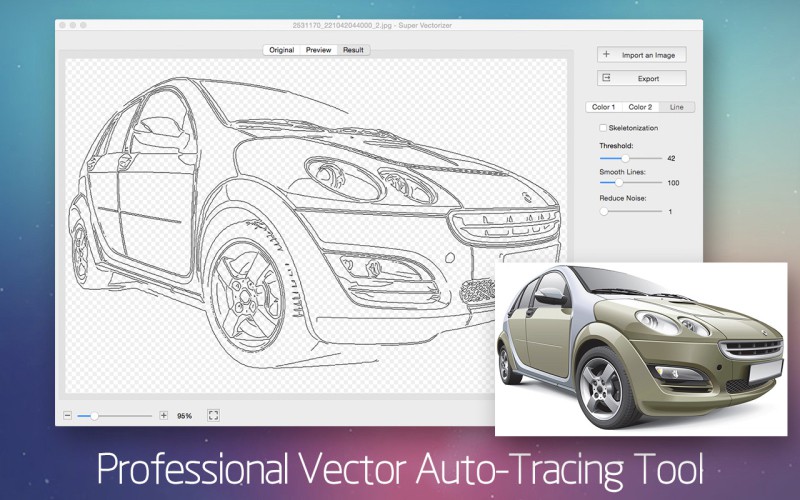
Way 2: Click Import to open the image in the preview pane.
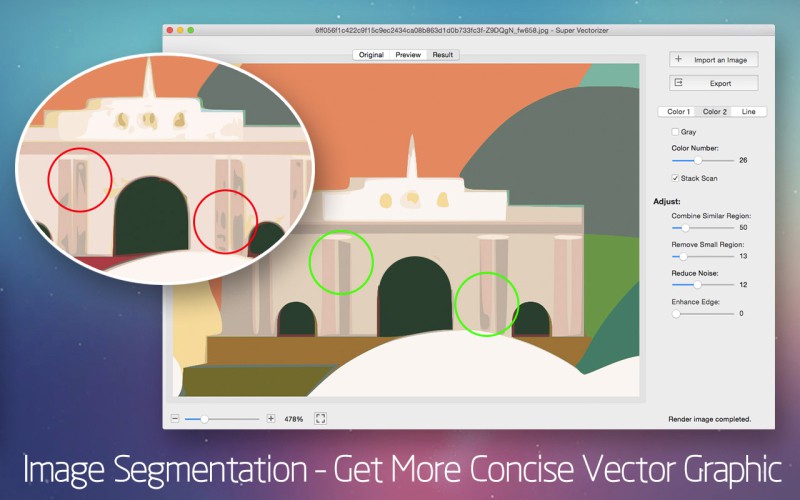
Way 3: Open the File menu, click Import, or press Command + I to open JPG, GIF, PNG, BMP, TIFF, PDF, PSD, TIF, ICO and other image formats.
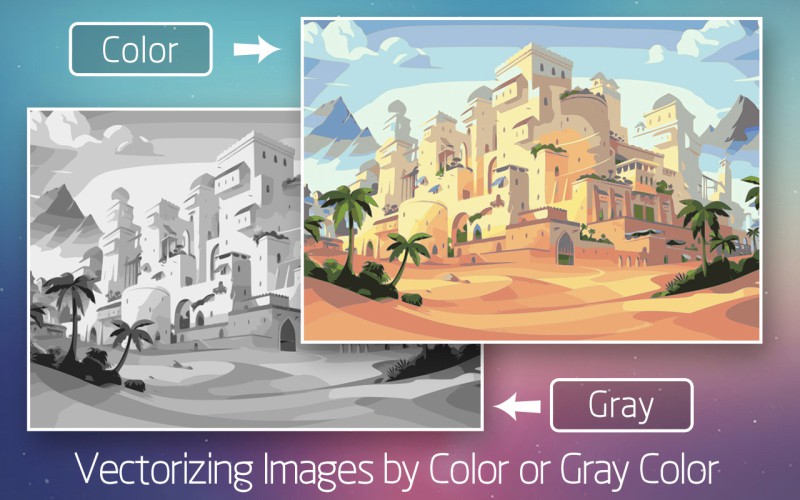
Step 2. Export the vectorized result on Mac or Windows
Once the image is imported, the vectorizing workflow starts automatically and you can see the vectorized result right away. The last step is to export the result after the image has been vectorized.
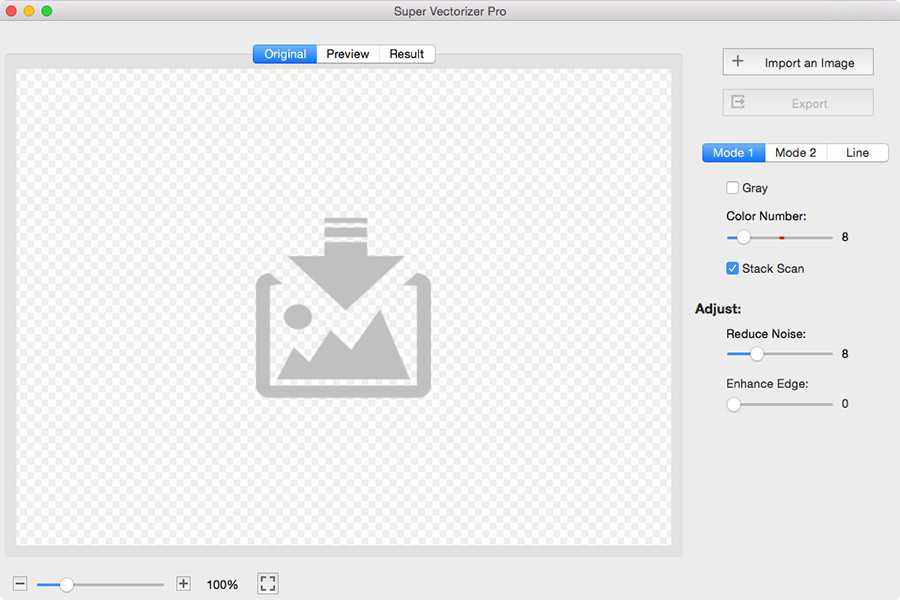
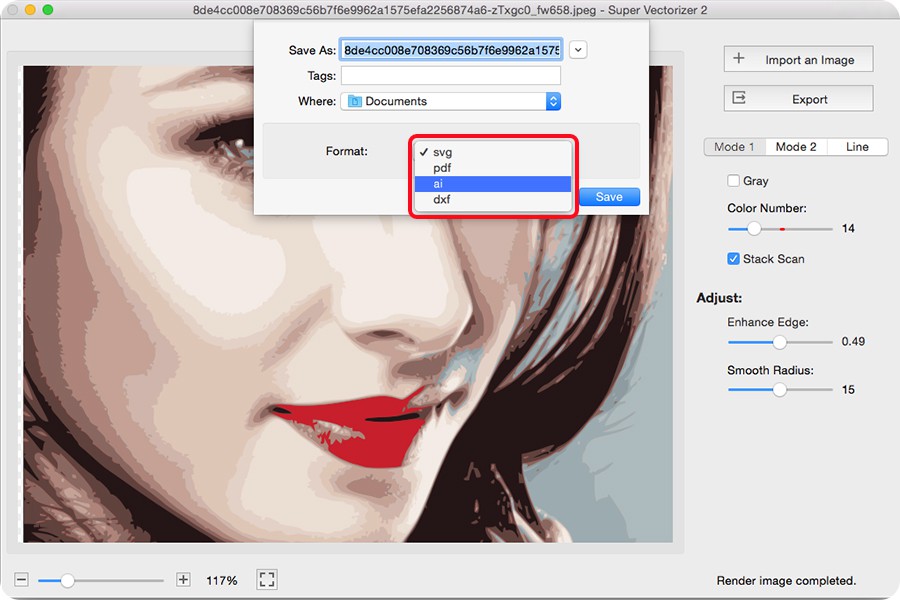
Click Export to save your vector image as AI, SVG, DXF or PDF on Mac or Windows.
Step 3. Reopen the vector image to edit it further
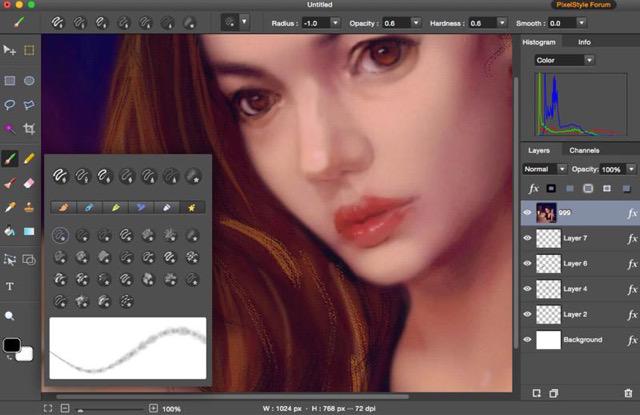
Reopen the vector image in applications such as Adobe Illustrator, CAD software or PixelStyle Photo Editor on Windows or Mac to keep editing.
Download Super Vectorizer Pro
One-time purchase $29.99 · Free trial to preview results (export requires a licence) · Mac + Windows
Frequently Asked Questions
What is the quickest way to vectorize an image on a Mac?
The fastest method is Super Vectorizer Pro - open the app, drag your PNG, JPG, or photo onto the window, and it auto-traces the image into editable vector paths in seconds. You can then export to SVG immediately, with no manual anchor drawing required.
Is there a free trial, and can I export without paying?
Super Vectorizer Pro offers a free trial so you can evaluate the tracing quality. During the trial the vector preview is shown, but exporting the finished vector file requires a purchased licence. The trial does not write out the completed SVG, AI, DXF or PDF without a purchase.
Which image formats can Super Vectorizer Pro import on Mac and Windows?
It imports JPG, GIF, PNG, BMP, TIFF, PDF, PSD, TIF, ICO and other common raster formats, plus already-scanned artwork. Both macOS (Apple Silicon M1, M2, M3 and Intel) and Windows 7 through 11 are supported.
What vector formats can I export to?
You can export the traced result as SVG, AI (Adobe Illustrator), DXF, PDF, EPS and related vector formats, making it easy to keep editing in Illustrator, CorelDRAW, CAD tools, or a cutting-machine workflow.
Does Super Vectorizer Pro run offline, or does it upload my image to a server?
It is a desktop application that processes everything locally on your Mac or Windows machine. Your images never leave your device, which makes it a private alternative to cloud-based vectorizers.
How long does it take to vectorize one image?
For typical logos and illustrations the auto-trace finishes in a couple of seconds. Larger or highly detailed photographs take a little longer, but the workflow is essentially import, auto-trace, export, so the whole task is usually under a minute.
Can I fine-tune the tracing after the automatic vectorization?
Yes. After the initial auto-trace you can adjust color count, edge smoothness, path simplification and the output style, then re-export. The result stays fully editable in your vector editor.
What gives the cleanest vector result?
Use source images with clear, high-contrast edges and a reasonably high resolution. Simple logos, icons and line art trace far more cleanly than busy photographs. Removing backgrounds beforehand also helps.
Can I use the exported SVG with Cricut, Silhouette or a laser cutter?
Yes. SVG is the standard cut-ready format for Cricut, Silhouette Cameo and most laser and CNC cutters. Export as SVG (or DXF for CAD-driven cutters) and import it directly into your cutting software.
How do I keep editing the vector after exporting?
Open the exported SVG, AI, DXF or PDF in Adobe Illustrator, a CAD application, or PixelStyle Photo Editor on Mac or Windows to refine colors, shapes and paths as needed.